Business opportunities in Dubai span sectors from artificial intelligence and halal trade to real estate and healthcare, backed by a government economic plan that aims to double the emirate’s economy by 2033. For Southeast Asian founders, the harder question isn’t whether Dubai has room to grow. It’s which sector fits your budget, and what the move actually costs once visas and banking are added in.
Key Takeaways
- Dubai’s economy grew 4.7% in the first nine months of 2025, with health and social work, financial services, and construction posting the fastest sector growth.
- A bundled Dubai company setup, including a 2-year residency visa and corporate bank account support, currently starts from roughly USD 9,000 for a free zone LLC and USD 12,500 for a mainland LLC.
- The UAE ranks 3rd globally on the Global Islamic Economy Indicator, making halal and Islamic finance a real, underreported opportunity most sector guides skip.
- Most free zones allow remote company formation, but opening a bank account and getting a residency visa still require at least one trip to Dubai.
- Pick the sector first. Let that decision determine mainland versus free zone, not the other way around.
What Makes Dubai’s Economy Attractive for New Business Right Now?
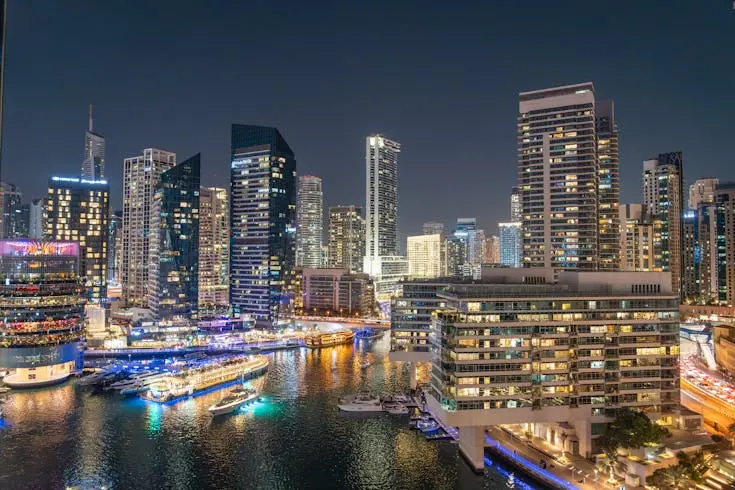
Dubai posted AED 355 billion in GDP during the first nine months of 2025, up 4.7% year on year, with the third quarter alone growing 5.3%. Growth wasn’t concentrated in one industry. Health and social work led at 15.4%, financial and insurance activities grew 8.5% and now account for 12% of GDP, and construction also grew 8.5%, according to the Government of Dubai Media Office.
That spread matters more than any single headline number. It means new demand is showing up in clinics and fintech firms at the same time as construction sites and logistics hubs. Behind it sits the Dubai Economic Agenda D33, the government’s plan to firmly establish Dubai among the world’s top three cities to invest, live, and work in over the coming decade.
Ownership rules changed too. Since 2021, most mainland business activities allow 100% foreign ownership, closing the gap that used to make free zones the only fully foreign-owned option. If you’re weighing Dubai against other regional bases, it’s worth reading how it stacks up against InvestinAsia’s other nine Asian markets on onshore versus offshore structuring before you lock in a jurisdiction.
Which Sectors Offer the Strongest Business Opportunities in Dubai in 2026?
The sectors below combine what’s actually growing in Dubai’s official economic data with where free zones and licensing authorities are actively building infrastructure for new entrants.
Technology, AI and Digital Services
Dubai’s information and communications sector grew 4.8% in the first nine months of 2025, contributing 4.7% to GDP. Dubai Internet City and Dubai Silicon Oasis are built specifically for software, AI, and R&D companies, and DIFC runs a dedicated innovation license for fintech and AI startups at reduced fees. This is a natural fit for founders with an existing tech team who want a Gulf base without relocating engineering.
E-commerce and Cross-Border Logistics
Dubai’s position between Asia, Africa, and Europe makes it a natural fulfillment hub, and free zones like JAFZA and Dubai CommerCity are built around import, export, and last-mile logistics. Southeast Asian brands with an existing supply chain often use a Dubai entity to serve Gulf and African customers without duplicating warehousing at home.
Real Estate and Construction
Real estate grew 6.7% in the first nine months of 2025, contributing 8.2% to GDP, while construction grew 8.5% and added 6.7% to GDP over the same period. Opportunities range from brokerage and property management to construction subcontracting and facility maintenance, all riding continued population growth in the emirate.
Financial Services and Fintech
Financial and insurance activities were Dubai’s second-fastest-growing sector in 2025 and its single largest GDP contributor among the sectors reported, at 12%. DIFC operates under a common law framework separate from onshore UAE law, which is a meaningful draw for fund managers, payment companies, and wealthtech founders who want regulatory clarity from day one.
Tourism and Hospitality
Dubai welcomed 13.95 million international visitors in the first nine months of 2025, a 5% increase on the year before, and accommodation and food services grew 4.7% over the same period. Beyond hotels, this opens space for tour operators, experience businesses, and travel technology serving a visitor base that keeps expanding.
Healthcare and Medical Tourism
Health and social work was Dubai’s fastest-growing sector in 2025 at 15.4%, though it’s growing from a smaller base than finance or real estate, contributing 1.5% to GDP so far. Specialty clinics, diagnostic centers, and telemedicine platforms benefit from a genuinely expanding expat population and a government push into medical tourism.
Halal Economy and Islamic Finance
This is the sector most business setup guides skip entirely. According to the UAE’s official government portal, the country ranks 3rd globally on the Global Islamic Economy Indicator, and Muslim consumers worldwide represent an estimated USD 2 trillion opportunity across lifestyle products, alongside a USD 3.6 trillion Islamic finance market. Dubai has actively pursued partnerships with halal industry players in Southeast Asia specifically, which makes this a genuinely underused entry point for Indonesian and Malaysian founders already operating in halal-certified sectors at home.
Renewable Energy and Green Technology
Dubai’s clean energy strategy and continued investment in solar infrastructure, including the Mohammed bin Rashid Al Maktoum Solar Park, are opening space for solar installation firms, energy efficiency consultants, and sustainability certification services tied to the emirate’s broader net zero commitments.
Food and Beverage
Dubai’s multicultural population and tourism volume support everything from cloud kitchens to specialty cafes and halal-certified food trading. Licensing runs through both a trade license and Dubai Municipality food safety approval, so this sector rewards founders who plan the compliance step early rather than as an afterthought.
Education and Professional Training
Dubai Knowledge Park exists specifically for education businesses, and demand for corporate training, professional certification, and online learning keeps growing alongside the emirate’s broader skills agenda. Private education activities generally need additional approval from the Knowledge and Human Development Authority on top of the standard trade license.
Notes from InvestinAsia Consultants
The most common mistake we see isn’t picking a weak sector. It’s picking a strong sector and then defaulting to whichever jurisdiction the first quote came from. A logistics founder who needs JAFZA’s port access and a consultant who just needs a flexi-desk have completely different structure needs, even if both are “trading” on paper.
Not Sure Which Sector Justifies Mainland Over Free Zone?
Get a package breakdown from a team that already runs Dubai and Southeast Asia setups under one roof.
What Should You Verify Before You Commit to a Sector?
“Dubai is tax-free” is only half true, and it’s the half that gets repeated the most. Personal income genuinely carries no tax. Corporate profits above AED 375,000 are taxed at 9%, and the widely advertised 0% free zone rate only applies to companies that qualify as a Qualifying Free Zone Person, which requires real substance in the UAE and qualifying income specifically, not just a license.
VAT registration becomes mandatory once taxable turnover crosses AED 375,000, and it’s a separate registration from corporate tax with its own threshold logic. Before you commit to a sector, confirm whether your planned activity qualifies for QFZP treatment or whether you should budget for the standard rate from the start. InvestinAsia’s full Dubai tax guide breaks down every rate, threshold, and compliance deadline current for 2026.
Sector-specific licensing is the other thing worth checking early. Healthcare needs Dubai Health Authority approval, F&B needs Dubai Municipality food safety sign-off, and education needs KHDA clearance, all on top of the base trade license. Confirming this before you file avoids a costly activity-code correction later.
Dubai’s opportunity is real and it’s spread across more sectors than most lists give it credit for, from AI and logistics to a halal economy that’s easy to overlook if you’re not already looking for it. The sector you pick should decide your structure, not the reverse, and the real cost is the bundled one, not the license-only number most quotes lead with.
Ready to Move on Your Dubai Opportunity?
One team, one timeline, across Dubai and Southeast Asia.
References
1. Government of Dubai Media Office. (2026). Dubai’s economy records AED355 billion GDP in first nine months of 2025, posting 4.7% growth. Retrieved from
https://mediaoffice.ae/en/news/2026/january/31-01/dubai-gdp-first-9-months-of-2025
2. Dubai Department of Economy and Tourism. (2026). Official portal. Retrieved from
https://www.dubaidet.gov.ae/en/
3. Government of Dubai, Invest in Dubai. (2026). Dubai Economic Agenda D33. Retrieved from
https://www.investindubai.gov.ae/en/why-dubai/d33-agenda
4. UAE Government Portal. (2024). Islamic economy. Retrieved from
https://u.ae/en/about-the-uae/economy/islamic-economy-
5. vOffice. (2026). Dubai Company Registration Service (Free Zone & Mainland). Retrieved from
https://voffice.co.id/en/services/company-registration-dubai