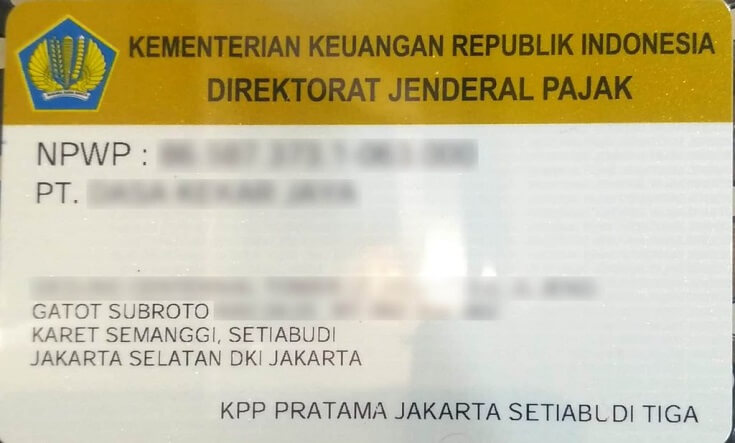

DPMPTSP stands for Dinas Penanaman Modal dan Pelayanan Terpadu Satu Pintu, Indonesia’s provincial or district and city government office for investment administration and integrated licensing services. It works alongside the national Online Single Submission (OSS) system, which manages risk-based business licensing. Foreign investors should contact the relevant office when a location, verification, or local service needs clarification.
Key Takeaways
- DPMPTSP is a regional government office, while OSS is the national electronic business licensing system.
- Government Regulation No. 28 of 2025 governs risk-based business licensing and replaced Government Regulation No. 5 of 2021.
- An issued Business Identification Number (NIB) does not settle every location, environmental, building, or sector approval.
- The right contact depends on the project address, activity, licensing authority, and stage of the application.
What the Regional DPMPTSP Office Actually Does
Indonesia’s regional DPMPTSP offices support investment services, licensing, and administrative coordination within local government authority. Government Regulation No. 6 of 2021 sets out regional business licensing administration. Ministry of Home Affairs Regulation No. 25 of 2021 addresses the DPMPTSP organization.
The DPMPTSP is a government agency, not a commercial registration agent. Its remit depends on the province or district and city. Services may include providing official guidance, coordinating applications, helping applicants navigate OSS, and facilitating responses from technical departments.
Jakarta’s DPMPTSP describes its work as investment administration and both licensing and non-licensing services. Its published service network is an example of local implementation, not a template for the offices or processing arrangements of every Indonesian province.
For foreign investors, the first question is practical: which office has authority for the proposed operating location and which agency must verify each outstanding requirement?
DPMPTSP and OSS Have Different Jobs
OSS is the national system through which businesses register activities and receive applicable risk-based licensing results. A DPMPTSP is part of regional government administration and may coordinate or exercise authority for particular steps handled through that system.
Government Regulation No. 28 of 2025 and Ministry of Investment and Downstreaming/BKPM Regulation No. 5 of 2025 provide the current framework for OSS-based business licensing. Which institution issues or verifies a requirement depends on the activity, location, and delegated authority.
| Question | OSS | DPMPTSP |
|---|---|---|
| Where does the business enter its activity and project data? | National electronic filing and licensing records | May assist with local application questions |
| Who handles a regional verification or request for clarification? | Routes information to the responsible authority | May coordinate or carry out the regional part under its authority |
| Where does a company find its NIB and licensing status? | Company OSS account and issued documents | Can help clarify a regional administrative issue |
| Does one registration close every licensing condition? | No; status and outstanding requirements must be checked per activity | Does not override national or sector requirements |
Our NIB and OSS licensing guide explains what the business identifier establishes. For the difference between an identifier and the other licensing instruments, see our overview of Indonesian business license types.
Notes from InvestinAsia Consultants
Keep a single project register with the OSS project identifier, KBLI, exact address, outstanding requirement, named authority, and last response date. When you speak to a local office, refer to the unresolved requirement rather than asking for a general permit status. That gives the officer something specific to check.
Does a National NIB Replace Local Approvals?
An NIB identifies a registered business operator and forms part of its licensing position. It does not, by itself, establish that the company has met every condition for a proposed site and activity.
The OSS portal distinguishes basic requirements concerning spatial suitability, environmental approval, and buildings. Government Regulation No. 28 of 2025 also distinguishes business licensing from supporting business approvals. The applicable combination differs by risk classification and project circumstances.
A company holding an NIB may still need to complete a Standard Certificate verification or receive a business license before undertaking the relevant commercial work. Our Standard Certificate guide explains why the verification status matters for medium-high-risk activities.
Regional offices may participate in verification and coordination. A company should still use the OSS record and its formal document to establish whether the relevant condition is complete.
Three Situations That Require Different Local Checks
A foreign investor should start with the work to be performed at the proposed address. The same company name and incorporation documents can produce different licensing needs across locations or activities.
A Consulting Office in Jakarta
A consultancy may need an NIB and the relevant licensing status for its registered activities. Before renting premises, confirm the actual address, permitted use, and any applicable building or spatial requirements.
If the company’s OSS account shows a location-related issue, identify the regional unit responsible for that address. Ask which document or portal record the reviewer needs rather than assuming the business has received an automatic exemption.
A Retail Outlet in Another City
A physical retail project raises questions about its operating location, trading activity, and premises. The local DPMPTSP can be a useful contact for regional process guidance, but product-specific rules may involve different regulators.
Check the activity description and risk classification before asking the office to confirm the next step. Our KBLI classification guide helps distinguish the business activity from the approvals attached to it.
A Factory Planned on an Industrial Site
A proposed factory requires closer attention to the exact site, environmental requirements, building documents, and the industrial activity. Different competent authorities may review different parts of the application.
Record who is responsible for each condition before signing a long lease or starting construction. Treat a site approval, a building approval, and an operating license as separate documents unless the competent authority confirms otherwise.
How to Find the Correct Authority for Your Project
Start with the company’s actual OSS record. Then match the issue to the government body that can resolve it. These steps reduce unnecessary visits and repeated submissions.
- Confirm the legal entity. Record the Indonesian company name, registered identification, and authorized representative. For a foreign-owned company, our PT PMA explainer distinguishes the legal entity from a branch or representative arrangement.
- Identify the exact activity. Check the five-digit KBLI description and the commercial activity conducted at the location.
- Confirm the address. Distinguish registered office, shop, warehouse, and production premises when they are different sites.
- Read the OSS result. Note whether the issue concerns the NIB, a Standard Certificate, a license, a basic requirement, or a supporting permit.
- Find the responsible institution. Use OSS guidance and the relevant regional government’s official DPMPTSP channel. Do not assume the nearest counter is the issuing authority.
- Present one clear question. Send the project details, error or status message, and the relevant supporting document without sharing account passwords.
- Record the answer. Retain the official correspondence and check whether the electronic record changes after the required action.
Company registration records and operating licenses must also be kept separate. Our AHU company-records guide explains why a ministry-issued corporate approval does not prove that an activity has completed OSS licensing.
Notes from InvestinAsia Consultants
Before escalating a stalled application, separate three causes: incomplete applicant data, a pending technical verification, and an issue outside the regional office’s authority. Attach the relevant OSS screen and document date. Ask for the next required action and the responsible unit in writing.
What to Confirm Before Committing to a Location
Check site requirements while the address is still negotiable. A company may obtain corporate legal status and a business identifier before confirming that its preferred premises can support every intended activity.
- Does the planned KBLI describe the actual business model at this site?
- Which spatial, environmental, building, and sector conditions apply to that location?
- What does the OSS account show as issued, verified, pending, or requiring correction?
- Which authority can confirm a disputed requirement, and through which official channel?
- What document will establish completion before the company begins the restricted activity?
Our Indonesia market entry strategy guide helps you decide who will contract, operate, and hold the permits. Regional licensing is one part of that decision, so the final structure should follow your commercial plan.
Plan the Next Step After the Licensing Check
For a new company, map the entity, activities, and premises before asking any office to resolve a specific approval. If you are still deciding where to operate, our Indonesia market research guide covers the evidence to gather before making that commitment.
Once the company and project details are ready, review our NIB Registration Service in Indonesia for assistance with the business-identification stage. The appropriate DPMPTSP or technical authority remains responsible for government decisions within its mandate.
Unsure Which Local Office Handles Your NIB Issue?
Review the NIB registration process before approaching the authority responsible for your project.
- Republic of Indonesia. (2021). Government Regulation No. 6 of 2021 on the Administration of Business Licensing in the Regions. Retrieved from
https://jdih.kemenkeu.go.id/dok/pp-6-tahun-2021 - Republic of Indonesia. (2025). Government Regulation No. 28 of 2025 on Risk-Based Business Licensing. Retrieved from
https://jdih.kemenkeu.go.id/dok/pp-28-tahun-2025 - Ministry of Home Affairs. (2021). Minister of Home Affairs Regulation No. 25 of 2021 on Regional Investment and One-Stop Integrated Service Offices. Retrieved from
https://peraturan.bpk.go.id/Details/185902/permendagri-no-25-tahun-2021 - Ministry of Investment and Downstreaming / BKPM. (2025). Ministerial Regulation No. 5 of 2025 on Risk-Based Business Licensing Through OSS. Retrieved from
https://peraturan.bpk.go.id/Details/332573 - Online Single Submission. (n.d.). Basic Requirements for Business Licensing. Retrieved from
https://oss.go.id/id/persyaratan-dasar - Jakarta Provincial DPMPTSP. (n.d.). About the Investment and One-Stop Integrated Service Office. Retrieved from
https://pelayanan.jakarta.go.id/home/profil/tentang-dpmptsp