An industrial estate in Indonesia is a government-registered zone of at least 50 hectares in a single stretch of land, developed and managed by a licensed industrial estate company under Government Regulation No. 24 of 2009 on Industrial Estates. Foreign and domestic manufacturers are generally required to locate their factories inside one of these zones rather than on standalone land.
This matters more than it sounds. Buy the wrong plot, or set up outside a registered estate without an exemption, and you can end up stuck mid-construction while local officials sort out whether your site even qualifies for an industrial business license. Below is a region-by-region list of Indonesia’s major industrial estates, the legal framework behind them, and what actually determines which one fits your business.
Key Takeaways
- Under PP No. 24/2009, an industrial estate must cover at least 50 hectares and its developer must hold an Izin Usaha Kawasan Industri (IUKI) before selling or leasing plots.
- Jababeka in Cikarang remains Indonesia’s largest single automotive and consumer-goods estate, hosting more than 2,000 companies from over 30 countries.
- JIIPE in Gresik and Kawasan Industri Terpadu Batang (KITB) are both Special Economic Zones (KEK), a different and stronger legal status than a standard industrial estate.
- Nickel and EV supply-chain manufacturers increasingly locate outside Java, at estates like Indonesia Morowali Industrial Park in Central Sulawesi.
- Cross-province estates and any estate involving foreign capital fall under BKPM’s delegated licensing authority, not the local Ministry of Industry office.
What Is an Industrial Estate Under Indonesian Law?
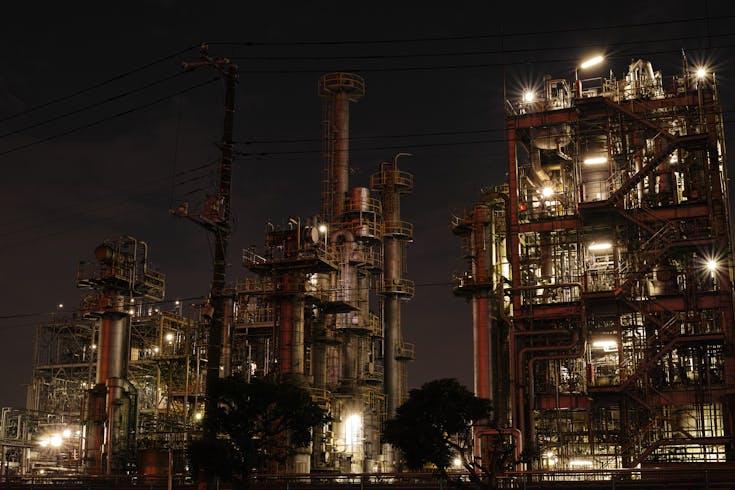
An industrial estate (kawasan industri) is defined under Article 1 of Government Regulation No. 24 of 2009 as a concentration of industrial activity equipped with supporting infrastructure, developed and managed by an industrial estate company. The minimum land area for a new estate is 50 hectares in one contiguous stretch, and the developer must hold an Izin Usaha Kawasan Industri (IUKI) before selling or leasing land to tenants.
According to Permenperin No. 05/M-IND/PER/2/2014, the developer first applies for an Izin Prinsip (principle license), then the IUKI itself, then an Izin Perluasan if it later expands the zone. For estates that cross provincial borders or involve foreign investment, the Minister of Industry has delegated licensing authority to BKPM (the Investment Coordinating Board) rather than provincial or district governments.
Developers are also required to set aside at least 2% of saleable industrial land for micro, small, and medium enterprises under the same regulation. Land not used within two years reverts to being available for MSME allocation.
Why Must Most Factories Locate Inside a Designated Estate?
Under Article 106 of PP No. 24/2009, industrial companies operating outside a designated industrial estate risk complications with their Izin Usaha Industri (industrial business license), particularly in areas the government has classified as an Industrial Peruntukan Zone. Provincial and district spatial plans (RTRW) increasingly steer new manufacturing toward mapped industrial zones, which means a factory built on non-designated land can face delayed environmental approvals, unclear utility access, or disputes over whether the site conforms to local zoning.
There are exceptions. Certain small-scale, agro-based, or strategically located industries can obtain siting approval outside a formal estate, but this requires a separate site permit and is handled case by case. For most manufacturing investors, buying inside a licensed estate is the faster and lower-risk path, since the developer has already cleared the zoning, environmental baseline, and utility questions for the whole site.
Notes from InvestinAsia Consultants
The mistake we see most often is a client falling in love with a piece of land based on price alone, then finding out months later that it sits outside a registered kawasan industri and needs a separate siting process. Checking IUKI status before signing anything saves far more time than it costs.
What Are the Largest Industrial Estates in West Java and Banten?
West Java’s Bekasi-Karawang-Cikarang corridor is Indonesia’s densest manufacturing belt, sitting along the Jakarta-Cikampek toll road with direct access to Tanjung Priok and Patimban ports.
Jababeka Industrial Estate
Jababeka, in Cikarang, Bekasi Regency, is Indonesia’s largest and most established industrial estate, founded in 1989 by PT Kawasan Industri Jababeka Tbk (IDX: KIJA). It hosts more than 2,000 companies from over 30 countries, including Toyota, Samsung, Unilever, and Mattel, and includes its own power plant, dry port, and education park. Reported land area runs to roughly 5,600 hectares once residential and commercial sections are included, though the core industrial plots are smaller; developers typically quote different figures depending on which phases are counted, so treat the headline hectare number as approximate.
Karawang International Industrial City (KIIC)
KIIC, in Karawang, is one of the country’s most established automotive and electronics estates, best known as a base for Toyota-affiliated manufacturing and component suppliers. It sits close to the Jakarta-Cikampek toll road and to Karawang’s other major estates, giving tenants easy access to a dense automotive supply chain. Independent, up-to-date figures on its current developed hectare count are inconsistent across sources, so anyone shortlisting KIIC should request current availability directly from the developer rather than relying on older published totals.
Greenland International Industrial Center (GIIC)
GIIC, part of Kota Deltamas in Cikarang, is developed by PT Puradelta Lestari Tbk (Sinar Mas Land) in partnership with Japan’s Sojitz Corporation. Reported total area sits between roughly 1,500 and 1,700 hectares depending on the phase counted. Tenants include Astra Otoparts, Surya Toto, and Daikin, which committed USD 220 million to a residential air-conditioner plant there. The estate is about 43 kilometers from Tanjung Priok Seaport and 12 kilometers from Cikarang’s dry port and rail link.
Suryacipta City of Industry
Suryacipta, a member of the Surya Internusa Group, manages a 1,400-hectare integrated estate in Karawang, 1.3 kilometers from the Karawang Timur toll gate. Over three decades of operation it has attracted roughly 150 global and 50 Indonesian companies, including Daihatsu, Nestlé, and Isuzu. The developer has since marketed a larger figure, around 4,100 hectares, that bundles in commercial and future-phase land alongside the original industrial core, so the 1,400-hectare figure is the more reliable one for currently developed industrial plots.
Krakatau Industrial Estate Cilegon (KIEC)
KIEC, in Cilegon, Banten, is anchored by Krakatau Steel and serves heavy industry, particularly steel and machinery manufacturing under KBLI 28. Its proximity to integrated steel production is the main draw for machinery makers whose raw material costs make up a large share of their cost of goods sold. Land pricing in the Serang-Cilegon corridor tends to run meaningfully below Cikarang-area rates, though exact figures shift with each land release and should be confirmed directly with the estate.
Also read: PT PMA in Bali: The Complete 2026 Guide for Foreign Investors
What Industrial Estates Are Developing in Central Java?
Central Java has become the government’s preferred corridor for new large-scale industrial development, backed by two National Strategic Projects.
Kawasan Industri Terpadu Batang (KITB)
Also branded Grand Batang City, KITB sits in Batang Regency and spans about 4,300 hectares, making it one of the largest single industrial developments in the country. It is designated a National Strategic Project (PSN) and connects to the Trans-Java toll road and Tanjung Emas Port in Semarang. Phase one attracted 14 tenants with a combined investment of roughly IDR 6.8 trillion and an estimated 15,700 jobs, including South Korea’s KCC Glass, which committed around USD 350 million to a 46-hectare plot after initially considering Malaysia.
Kendal Industrial Park (KIP)
KIP, in Kendal Regency near Semarang, is a joint venture between Singapore’s Sembcorp Development and Indonesia’s Jababeka Group, inaugurated in 2016 by President Joko Widodo and then-Singapore Prime Minister Lee Hsien Loong. Reported total size ranges from about 2,200 to 2,700 hectares across different company materials, likely reflecting different development phases. It has attracted more than 100 business entities across food, furniture, fashion, electronics, and automotive manufacturing.
Which Industrial Estate Anchors East Java’s Port and Smelter Industry?
Java Integrated Industrial and Ports Estate (JIIPE)
JIIPE, in Gresik, East Java, covers around 3,000 hectares and is designated as a Special Economic Zone (KEK), a step up in legal status from a standard industrial estate. It is jointly developed by PT Berkah Kawasan Manyar Sejahtera, a venture between Pelindo and AKR Corporindo Tbk, and is East Java’s only fully integrated estate with its own deep-sea port. Its anchor tenant is PT Freeport Indonesia’s copper smelter, a USD 3.7 billion, 100-hectare facility that is the world’s largest single-line copper refining plant, with capacity to process 1.7 million tons of copper concentrate annually. Other tenants include Xinyi Glass, Xinyi Solar, and Hailiang Group.
What Is the Difference Between an Industrial Estate and a Special Economic Zone (KEK)?
A standard industrial estate operates under an IUKI and follows the general industrial licensing framework. A Special Economic Zone (Kawasan Ekonomi Khusus, or KEK) is a separate legal designation created under Law No. 39 of 2009 on Special Economic Zones, granted by presidential decree to a specific area, and it carries its own package of tax holidays, VAT exemptions, and simplified customs procedures on top of standard industrial estate infrastructure. JIIPE, KITB, and Sei Mangkei (covered below) are all KEKs; Jababeka, Suryacipta, and GIIC are standard industrial estates without that additional designation, though companies inside them can still apply for tax holiday or tax allowance incentives through OSS on a case-by-case basis.
What Industrial Estates Operate Outside Java?
Java still holds most of Indonesia’s manufacturing capacity, but downstream mineral processing and export-oriented resource industries have pushed major estates onto other islands.
Indonesia Morowali Industrial Park (IMIP)
IMIP, in Central Sulawesi, covers roughly 2,000 hectares and is one of the country’s most important nickel and stainless steel processing hubs. It sits at the center of Indonesia’s nickel downstreaming push, which feeds directly into the country’s EV battery supply chain strategy.
Kawasan Industri Ketapang
Located in Ketapang, West Kalimantan, this estate covers approximately 2,150 hectares and is managed by PT Ketapang Bangun Sarana. It primarily supports natural resource-based industrial activity rather than the automotive or electronics manufacturing typical of Java’s estates.
Sei Mangkei Special Economic Zone
Sei Mangkei, in Simalungun, North Sumatra, spans about 1,933.8 hectares and is operated by PT Kawasan Industri Nusantara. Designated a KEK, it supports palm oil downstream processing along with other industrial sectors, and it is one of the few major estates outside Java with SEZ status.
Notes from InvestinAsia Consultants
Clients researching Java estates alone often miss that outside-Java sites, especially KEKs tied to nickel downstreaming, can carry stronger tax incentives than anything available in Cikarang. If your sector qualifies, it is worth a direct comparison before assuming Java is the default.
Ready to Set Up the Entity Behind Your Factory?
Before you can buy land in any estate, you need a PT PMA. InvestinAsia handles the registration end to end.
How Do You Choose the Right Industrial Estate for Your Factory?
Sector fit matters more than raw size. An electronics assembler gains little from Krakatau’s steel supply chain, and a heavy machinery producer gains little from GIIC’s consumer-goods tenant mix. Start by mapping your KBLI classification against each estate’s existing tenant base, since clustering effects (shared suppliers, trained labor pools, logistics vendors) compound over the life of the factory.
Port distance and toll access shape logistics costs directly, especially for export-oriented manufacturers who move containers daily. Land price varies widely by corridor: Cikarang and Karawang carry a premium for their maturity and connectivity, while Banten and Central Java corridors are often significantly cheaper for comparable plot sizes. Licensing status is the factor investors check last and regret checking last: confirm the estate’s own IUKI is current, and if the site is a KEK, confirm which specific incentive package applies to your sector.
Once you have shortlisted an estate, the practical next step is the physical build-out and utility connection process, which InvestinAsia’s factory expansion support handles alongside the legal setup, so plot selection and construction planning move on the same timeline instead of stalling between separate vendors.
Our guide to onshore company structures in Asia covers how the PT PMA entity you set up interacts with land ownership rights, since foreign-owned companies generally hold industrial land through Hak Guna Bangunan (Right to Build) rather than freehold title.
What Does It Cost to Set Up in an Industrial Estate?
Land prices vary by corridor and change frequently, so any figure quoted here should be verified directly with the estate before budgeting. Beyond the land price itself, expect service charges for shared infrastructure (roads, water treatment, security), utility connection fees, and the standard PT PMA registration costs, including the current IDR 2.5 billion minimum paid-up capital requirement under BKPM Regulation No. 5 of 2025. Larger qualifying investments can access a corporate tax reduction or multi-year tax holiday; our comparison of corporate tax rates across Asia breaks down how Indonesia’s incentive structure compares to neighboring markets.
Frequently Referenced Regulations
Legal Basis for Industrial Zones in Indonesia:
- Law No. 5 of 1984 on Industry (UU No. 5 Tahun 1984 tentang Perindustrian): the foundational industrial law, still in effect.
- Government Regulation No. 24 of 2009 on Industrial Estates: sets the 50-hectare minimum, IUKI requirement, and MSME land allocation rule, currently in effect.
- Ministerial Regulation No. 05/M-IND/PER/2/2014: procedural rules for the Izin Prinsip, IUKI, and Izin Perluasan.
- Law No. 39 of 2009 on Special Economic Zones: the separate legal basis for KEK status held by JIIPE, KITB, and Sei Mangkei.
Skip the Trial and Error on Site Selection
Get your PT PMA registered correctly the first time, so land purchase and licensing move without delays.
References
1. Ministry of Industry, Republic of Indonesia. Government Regulation No. 24 of 2009 on Industrial Estates.
https://kemenperin.go.id
2. BKPM (Indonesia Investment Coordinating Board). Investment procedures and licensing delegation for industrial estates.
https://www.bkpm.go.id
3. Java Integrated Industrial and Ports Estate (JIIPE). Official estate profile and tenant information.
https://www.jiipe.com
4. Kawasan Industri Terpadu Batang (KITB) / Grand Batang City. Official project information.
https://grandbatangcity.co.id
5. Kendal Industrial Park. Official company profile.
6. Suryacipta City of Industry. Official estate information.