

A PT PMA (Perseroan Terbatas Penanaman Modal Asing) is a foreign-owned limited liability company, and it is the only route through which a foreign investor can legally hold long-term rights to land in Indonesia. It cannot hold freehold title, but it can hold Hak Guna Bangunan (HGB, Right to Build), Hak Pakai (Right to Use), and, for agribusiness, Hak Guna Usaha (HGU). That distinction, between owning land outright and holding a registered right to build and use it, is where most of the confusion starts, and where most of the costly mistakes happen too.
Key Takeaways
- A PT PMA can hold HGB or Hak Pakai land titles under Government Regulation No. 18 of 2021 (PP 18/2021), but never Hak Milik (freehold), which is reserved for Indonesian citizens under the 1960 Agrarian Law.
- HGB runs in three stages under PP 18/2021: an initial 30-year grant, a 20-year extension, then a 30-year renewal, for a maximum of 80 years, not a flat 80-year term from day one.
- Since mid-2025, Indonesia has been more aggressively enforcing “active use” requirements on HGB land. A title that sits idle or belongs to a dissolved PT PMA can revert to the state (lepasan HGB ke negara).
- A PT PMA used mainly to hold property still has to meet the full BKPM Regulation No. 5 of 2025 capital framework: IDR 2.5 billion paid-up capital and an investment plan above IDR 10 billion per KBLI code.
What Land Rights Can a PT PMA Hold in Indonesia?
A PT PMA can hold three land rights under Indonesian agrarian law: HGB, Hak Pakai, and HGU. All three sit under the framework set by PP 18/2021, which consolidated and updated the older land-rights regulations after the 2020 Job Creation Law. None of them is the same thing as ownership in the sense a US or UK buyer would recognize. What you get is a registered, transferable, mortgageable right to a specific parcel for a fixed term, not a title that lasts forever.
Hak Guna Bangunan (HGB)
HGB, or Right to Build, is the workhorse title for commercial property. It lets a PT PMA construct and operate buildings, whether that’s a villa complex, a hotel, an office, or a warehouse. The land underneath can be state land, land already held under HPL (Management Rights), or land converted from Hak Milik. This is the title most PT PMA property investors end up with.
Hak Pakai (Right to Use)
Hak Pakai is more limited. A PT PMA can hold it, but it’s typically used for land that comes with narrower conditions attached, such as land tied to a specific social or religious purpose, or where HGB simply isn’t available. Individual foreigners with a KITAS or KITAP can also hold Hak Pakai personally, which is a separate route entirely from the PT PMA structure and generally restricted to one residential property.
Hak Guna Usaha (HGU)
HGU is the title for large-scale agricultural, plantation, or aquaculture land. It’s rarely relevant to villa or commercial property buyers, but if your PT PMA’s business is agribusiness, this is the title that applies, not HGB.
| Title | Who can hold it | Typical use | Maximum duration |
|---|---|---|---|
| Hak Milik (freehold) | Indonesian citizens only | Residential, any use | Indefinite |
| Hak Guna Bangunan (HGB) | Indonesian citizens, Indonesian legal entities, PT PMA | Commercial and residential construction | 80 years (30+20+30) |
| Hak Pakai | PT PMA, and individual foreigners with valid stay permits | Residential use, special-purpose land | Up to 80 years, terms vary by holder type |
| Hak Guna Usaha (HGU) | Indonesian citizens, Indonesian legal entities, PT PMA | Agriculture, plantation, aquaculture | 95 years (35+25, renewable 35) |
How Long Does a PT PMA’s HGB Title Actually Last?
HGB does not come as a flat 80-year grant. Under PP 18/2021, it’s built in three separate stages: an initial grant of up to 30 years, an extension of up to 20 years, and then a renewal of up to another 30 years. Each stage has to be applied for separately at the National Land Agency (BPN), and each application is assessed on its own merits. The 80-year figure that shows up everywhere online is the theoretical ceiling if all three stages are approved back to back, not a guarantee.
This matters for two practical reasons. First, extension and renewal aren’t automatic. BPN checks that the land is still being used consistently with what it was granted for. Second, an HGB title attached to a PT PMA is only as durable as the company holding it. If the company is dissolved, deregistered, or simply stops filing its compliance reports, the title’s status becomes vulnerable, which is the subject of the next section.
Why Can’t a PT PMA Get Hak Milik (Freehold) Title?
Freehold title in Indonesia is reserved by law for Indonesian citizens and a narrow list of Indonesian legal entities. This comes straight from the Basic Agrarian Law (UUPA No. 5 of 1960), which set up the entire tiered system of land rights that still governs Indonesia today. A PT PMA is, by definition, a company with foreign shareholders, so it falls outside that eligibility regardless of how much of its equity is actually foreign versus local.
If a PT PMA buys land that’s currently under Hak Milik title from an Indonesian seller, the title has to be converted to HGB before the transaction can register cleanly. A notary/PPAT handles that conversion with BPN, and it typically adds several weeks to a purchase timeline. Anyone telling you a PT PMA can somehow acquire or retain Hak Milik is either mistaken or describing a structure that won’t hold up under scrutiny.
Can a PT PMA Lose Its HGB Land Rights?
Yes, and this is the part most older guides on this topic leave out entirely. Since mid-2025, Indonesia has tightened enforcement around what’s informally called lepasan HGB ke negara, meaning the HGB right is released and the land reverts to state control (tanah negara). Once that happens, the previous holder can’t simply reclaim it. Any future use requires a fresh application, treated as a brand-new case.
A handful of situations trigger this: the HGB expires with no renewal filed, the holder voluntarily releases the right, or the PT PMA that holds the title becomes inactive or is legally dissolved. Unpaid land and building tax (PBB), missed LKPM investment reports, and an assumption that “the notary will handle deadlines” are the recurring patterns behind cases that go wrong.
Notes from InvestinAsia Consultants
The clients who run into trouble almost never lose their HGB through a legal dispute. It’s administrative drift: a PT PMA that stops filing quarterly LKPM reports, a property that sits empty for two years with no construction activity, or a company that’s technically still registered but hasn’t touched its OSS dashboard in years. None of that shows up as a problem until the renewal application gets rejected.
What Does a PT PMA Need to Buy Land or Property in Indonesia?
Setting up the company is only the first layer. A PT PMA formed mainly to hold property still has to satisfy every requirement that applies to any other PT PMA under Indonesia’s current registration framework.
- Minimum paid-up capital of IDR 2.5 billion, deposited into the company’s Indonesian bank account under BKPM Regulation No. 5 of 2025.
- An investment plan exceeding IDR 10 billion per KBLI code, declared through OSS-RBA and tracked through quarterly reporting, generally excluding the land and buildings themselves.
- A KBLI code that actually matches the intended activity, whether that’s villa rental, property development, or hotel operation. A mismatched code is one of the most common reasons a PT PMA’s later permit applications get rejected.
- Zoning and permit compliance, including a Building Approval (PBG) before construction and a Certificate of Fitness for Use (SLF) once it’s completed.
- Ongoing compliance: quarterly LKPM reports to BKPM, corporate tax filings, and the annual shareholders’ meeting.
Once the PT PMA has its legal entity status, NPWP, and NIB, a licensed notary/PPAT handles the land survey, due diligence on the certificate, the purchase or lease agreement, and registration with BPN. For a Hak Milik-to-HGB conversion specifically, budget extra processing time on top of the standard purchase timeline.
Not Sure Your Capital Plan Adds Up?
InvestinAsia’s advisors map out the exact capital, KBLI, and land-title path for your property project before you commit a rupiah.
What Property Taxes Does a PT PMA Pay on Land in Indonesia?
Any PT PMA that owns or uses land and buildings commercially is liable for Pajak Bumi dan Bangunan (PBB), Land and Building Tax. The rate runs up to 0.5% of the taxable property value (NJKP), which is calculated as 40% of the property’s assessed sale value (NJOP) minus a small non-taxable threshold. On a commercial property with an NJOP of IDR 5.8 billion, for example, that works out to roughly IDR 11.6 million a year. Beyond PBB, buying the property itself typically triggers BPHTB (the acquisition tax, paid by the buyer) and, on the seller’s side, a final income tax on the transfer. A full breakdown of the company’s other recurring obligations, including corporate income tax and VAT, is covered in InvestinAsia’s guide to PT PMA taxation.
Is a Nominee Arrangement a Safer Shortcut Than a PT PMA?
No, and this is worth stating plainly because the arrangement still gets pitched informally, especially in Bali’s villa market. A nominee structure has an Indonesian individual hold Hak Milik title on paper while a side agreement gives the foreign investor real control. It’s illegal under Indonesian law, and Indonesian courts won’t enforce the side agreement if the nominee decides to act against the foreign investor’s interests. There’s no legal recourse if that happens.
Indonesian authorities have stepped up enforcement against nominee setups in recent years, particularly around Bali property. A PT PMA costs more to set up and comes with real ongoing compliance work, but it’s the only structure that actually gives a foreign investor enforceable legal protection over the asset.
PT PMA vs. Other Property Options for Foreigners in Indonesia
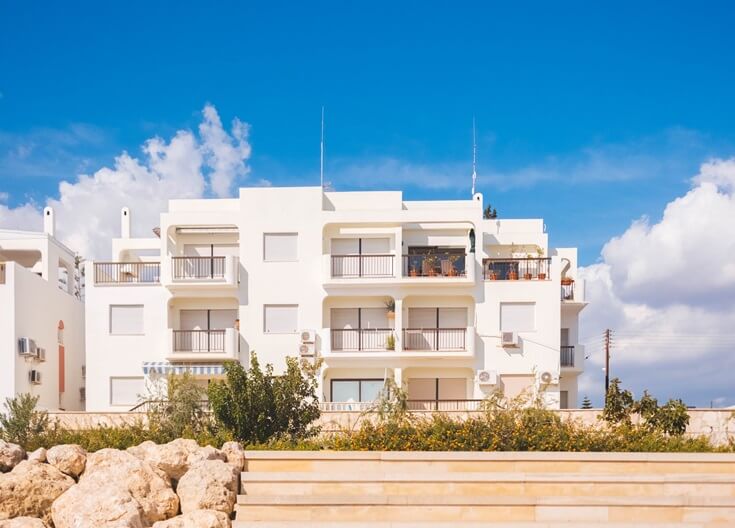
A PT PMA isn’t the only legal route to Indonesian property, and it isn’t always the right one. The choice mostly comes down to whether the goal is commercial (rental income, hospitality, development) or personal residence.
| Structure | Best for | Title held | Main limitation |
|---|---|---|---|
| PT PMA | Commercial property, rental businesses, multi-property portfolios | HGB or Hak Pakai (company name) | Highest capital and compliance burden |
| Individual Hak Pakai | A single personal residence | Hak Pakai (personal name) | Requires KITAS/KITAP, one property, residential use only |
| Leasehold (Hak Sewa) | Shorter-term personal use, lower upfront cost | No registered title, contractual lease | No underlying legal title, weaker long-term security |
Anyone planning to run a rental business, develop multiple units, or operate a hospitality venture needs the PT PMA route. Anyone who wants a single home to live in and already holds a valid stay permit has a simpler, cheaper path through individual Hak Pakai.
Ready to Structure Your Indonesia Property Investment Correctly?
18+ years of expertise and 380+ in-house professionals across Jakarta and Bali, from PT PMA setup through land registration.
Frequently Asked Questions
Can a foreigner own land in Indonesia without a PT PMA?
Only in a limited way. A foreign individual holding a valid KITAS or KITAP can register Hak Pakai on one residential property, but not HGB, and not for commercial use. Anyone wanting to run a rental or development business needs a PT PMA.
What happens if a PT PMA’s HGB title expires without renewal?
The land reverts to the state as tanah negara. Getting it back isn’t a renewal process at that point; it’s a brand-new application at BPN, with no guarantee of approval and no priority given to the previous holder.
How long does it take a PT PMA to acquire land in Indonesia?
Once the PT PMA itself is registered, a straightforward land purchase with clean documentation typically takes several weeks to a few months for due diligence, agreement, and BPN registration. A Hak Milik-to-HGB conversion adds extra time on top of that.
Is it cheaper to buy property through a PT PMA or a nominee?
A nominee arrangement looks cheaper upfront because it skips company setup and capital requirements. It isn’t actually cheaper once you account for the risk: the arrangement is unenforceable in Indonesian courts, and the foreign investor has no legal claim if the nominee acts against them.
Does a PT PMA need a specific business license to hold property?
Yes. The PT PMA’s registered KBLI code has to match the actual property activity, such as villa rental, hotel operation, or property development. A generic or mismatched code is a common reason licensing gets held up later.
References
1. Government of Indonesia. (1960). Undang-Undang Pokok Agraria (UUPA) No. 5 of 1960 on Agrarian Principles. Retrieved from
https://peraturan.go.id/id/uu-no-5-tahun-1960
2. Government of Indonesia. (2021). Government Regulation No. 18 of 2021 on Management Rights, Land Rights, Strata Title and Land Registration (PP 18/2021). Retrieved from
https://peraturan.go.id/id/pp-no-18-tahun-2021
3. Ministry of Investment and Downstreaming/BKPM. (2025). BKPM Regulation No. 5 of 2025 on Risk-Based Business Licensing and Investment Facilities. Retrieved from
https://bkpm.go.id