A free zone in Dubai is a designated economic area, regulated by its own free zone authority rather than the Dubai Department of Economy and Tourism (DET), where foreign investors can hold 100% of a company’s shares without a local partner. Dubai has more than 25 of these zones, each built around a specific industry, from commodities trading to media to healthcare. This guide lists every active one, compares their cost and focus, and explains how they differ from a mainland company under the latest 2025 regulatory changes.
Key Takeaways
- Dubai operates more than 25 free zones, each regulated by its own authority and built around a specific industry such as trading, finance, media, or logistics.
- Government license fees for a free zone company typically start around AED 12,000 for budget-friendly zones like IFZA or Meydan and rise past AED 80,000 for regulated hubs like DIFC. A full-service package including a flexi-desk, two years of UAE residency visa, and bank account support starts from around AED 34,500.
- Since late 2025, free zone companies can apply for a mainland branch permit and can re-domicile to mainland without liquidating, which narrows the gap with mainland companies considerably.
What Is a Free Zone in Dubai?
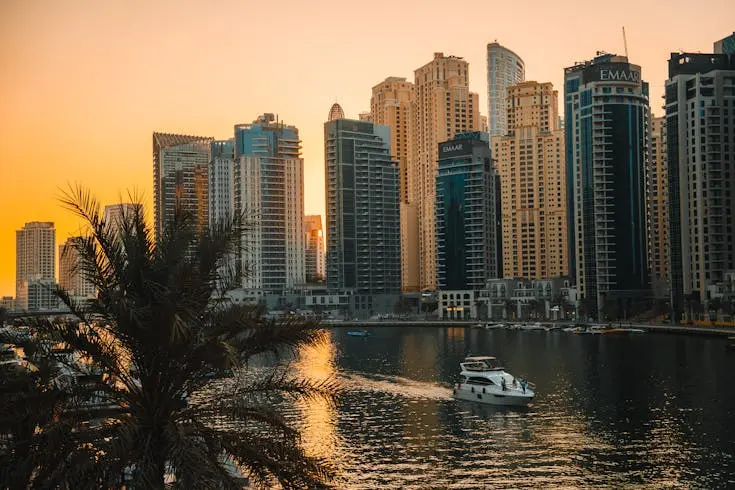
A Dubai free zone is a geographically defined area where a separate authority, not the federal Department of Economy and Tourism, issues trade licenses and sets the rules for company formation. According to the UAE government’s official portal, businesses inside a free zone are governed primarily by their free zone authority’s regulations, alongside general federal commercial law where it applies. This structure is what allows 100% foreign ownership, full profit repatriation, and exemption from import and export duties on goods that stay inside the zone or move internationally.
Each free zone is purpose-built around one or more industries. DMCC focuses on commodities and trading, DIFC on regulated financial services, Dubai Internet City on technology, and so on. Picking the wrong one for your activity can mean your license simply does not cover what you actually do, which is the single most common and most expensive mistake foreign founders make.
Complete List of Dubai Free Zones (2026)
The table below covers the active free zones operating in Dubai as of 2026, organized by primary industry focus. License fees are approximate government figures compiled from multiple industry sources and do not include office rent, visa costs, or bank account fees, which can add significantly to the total. Several niche zones publish pricing only on request, which is noted accordingly.
| Free Zone | Best For | Approx. Starting License Fee* | Approx. Setup Time |
|---|---|---|---|
| International Free Zone Authority (IFZA) | General trading, consulting, multi-activity licenses | AED 12,000 to 13,000 | 3 to 5 working days |
| Meydan Free Zone | Startups, digital business, consulting | AED 12,500 | 3 to 5 working days |
| Dubai South (formerly Dubai World Central) | Logistics, aviation, e-commerce | AED 8,500 to 35,000 | 3 to 7 working days |
| Dubai CommerCity (DCC) | E-commerce, online retail, fulfillment | AED 12,000 to 20,000 | 5 to 10 working days |
| Dubai Silicon Oasis (DSO) | Technology, electronics, startups | AED 12,000 to 20,000 | 3 to 5 working days |
| Dubai Multi Commodities Centre (DMCC) | Commodities trading, crypto and fintech, general trade | AED 30,000 to 35,500 | 5 to 10 working days |
| Jebel Ali Free Zone (JAFZA) | Manufacturing, logistics, import and export | AED 25,000 and up | 5 to 10 working days |
| Dubai Airport Free Zone (DAFZA) | Aviation, electronics, cargo, fast customs | AED 15,000 to 25,000 and up | 5 to 10 working days |
| Dubai Internet City (DIC) | IT, software, technology companies | AED 18,000 to 40,000 | 5 to 10 working days |
| Dubai Media City (DMC) | Media, advertising, publishing, broadcasting | AED 18,000 to 40,000 | 5 to 10 working days |
| Dubai International Financial Centre (DIFC) | Banking, asset management, fintech, insurance, legal | AED 30,000 to 80,000 and up | 7 to 14 working days |
| Dubai Healthcare City (DHCC) | Hospitals, clinics, healthcare professionals | Varies, subject to MOH approval | Longer, due to regulatory review |
| Dubai Design District (d3) | Fashion, design, creative industries | AED 15,000 to 30,000 | 5 to 10 working days |
| Dubai World Trade Centre (DWTC) Free Zone | Wholesale trade, events, exhibitions | AED 20,000 and up | 5 to 10 working days |
| Dubai Science Park (DSP) | Pharmaceuticals, biotech, energy, science | AED 15,000 to 25,000 | 5 to 10 working days |
| Dubai Knowledge Park (DKP) | HR services, training, education support | AED 15,000 and up | 5 to 10 working days |
| Dubai International Academic City (DIAC) | Universities, training providers, higher education | On request | Varies |
| Dubai Production City (DPC) | Publishing, printing, production services | On request | 5 to 10 working days |
| Dubai Studio City (DSC) | Film, TV, and broadcast production | On request | 5 to 10 working days |
| Dubai Outsource City (DOC) | BPO, call centers, outsourcing | On request | 5 to 10 working days |
| Dubai Biotechnology and Research Park (DuBiotech) | Biotech and pharmaceutical R&D | On request | Varies |
| Dubai Maritime City | Shipbuilding, maritime services, ship registration | On request | Varies |
| Dubai Gold and Diamond Park | Jewelry manufacturing, trading, retail | On request | 5 to 10 working days |
| International Humanitarian City (IHC) | NGOs and humanitarian organizations | On request | Varies |
| Dubai Car and Automotive City Free Zone (DUCAMZ) | Auto trading, spare parts, automotive services | On request | Varies |
*These are approximate government license fees compiled from multiple industry sources current as of mid-2026. They exclude office rent, visa fees, and bank account costs, and they change without notice. Treat this as a starting reference point and confirm exact pricing with the free zone authority or with InvestinAsia before budgeting.
A Closer Look at the Most Searched Dubai Free Zones
Twenty-five options is a lot to scan through. These are the zones that come up most often in setup conversations, and why.
DMCC: The Default for Trading and Commodities
DMCC sits in Jumeirah Lakes Towers and has been named Global Free Zone of the Year by fDi Intelligence multiple years running. It is the natural home for commodities, gold, diamonds, and increasingly crypto and fintech businesses. The license costs more than budget zones like IFZA, but the address carries weight with banks and counterparties.
JAFZA: Built for Port Access
Jebel Ali Free Zone (JAFZA), established in 1985, was the UAE’s first free zone and remains the strongest choice for manufacturing, large-scale import and export, and re-export businesses that need direct access to Jebel Ali Port.
DIFC: The Only Real Option for Regulated Finance
DIFC operates under English common law with its own courts and its own regulator, the Dubai Financial Services Authority. If your business involves banking, asset management, or insurance, DIFC is effectively the only credible Dubai address, which is also why it carries the highest entry cost on this list.
IFZA and Meydan: The Budget-Friendly Pair
IFZA, based in Dubai Silicon Oasis, and Meydan Free Zone both offer fully digital, multi-activity licenses starting around AED 12,000 to 13,000. They are the most common starting point for consultants, digital service providers, and small trading companies that do not need a flagship address.
DAFZA: For Air Cargo and Fast-Moving Goods
Located inside Dubai International Airport, DAFZA is built for aviation, electronics, and cargo businesses that depend on rapid customs clearance and direct air freight access.
Dubai South: Logistics Near the New Airport
Dubai South, formerly Dubai World Central, surrounds Al Maktoum International Airport and is positioned for logistics, aviation, and e-commerce. Pricing is broader than most zones, ranging from roughly AED 8,500 for a basic license to AED 35,000 or more for fuller packages.
Dubai Internet City and Dubai Media City: The Tech and Content Cluster
Operated together under the Dubai Development Authority, these two zones host most of the region’s technology, software, media, and advertising companies, including several global names. They sit at a higher price point than IFZA or Meydan but offer a more established business community.
Dubai CommerCity: Built for Online Retail
Dubai CommerCity is the only Dubai free zone purpose-built for e-commerce, with integrated fulfillment and warehousing infrastructure rather than a generic office package.
Twenty-five zones is a lot to narrow down alone.
InvestinAsia has a local team in Business Bay and 18+ years of cross-border setup experience to help you match the zone to your activity.
How Much Does It Cost to Set Up in a Free Zone in the UAE?
The bare government license fees in the table above range widely, from roughly AED 12,000 at IFZA or Meydan to AED 80,000 or more at DIFC. A license alone does not include a visa, an office, or a bank account, so it understates what you actually need to spend to be operational.
For a complete, real-world figure, InvestinAsia’s Dubai partner offers two all-in packages that bundle the license with an office, two years of UAE residency visa, Emirates ID, and corporate bank account support. A Free Zone LLC package starts at USD 8,000, covering business name reservation, MOA drafting and submission to the free zone authority, one year of Flexi Desk service, one year of virtual office and call answering, and two years of UAE residency visa with Emirates ID and basic health insurance. A Mainland LLC package starts at USD 12,500, with the equivalent business setup steps plus EJARI registration and DED and bank inspection assistance, and a VIP medical check-up included with the visa. Setup pricing across both options starts from around AED 34,500, with registration typically completed within about 7 business days before bank and visa processing.
For the full step-by-step process behind these packages, see the full Dubai company registration process.
Which Is the Cheapest Free Zone Company in Dubai?
Based on published government license fees, IFZA and Meydan are consistently the two cheapest general-purpose options within Dubai, both starting around AED 12,000 to 13,000 for a multi-activity license. A bare license is not a functioning company on its own. Once you add an office, a visa, and bank account support, a complete Free Zone LLC package through InvestinAsia’s Dubai partner starts at USD 8,000, which is a more realistic number to budget against than the license fee alone.
Which Dubai Free Zone Is Best for Your Business?
There is no single best free zone. The right one depends entirely on what you actually do. As a starting framework: choose DMCC or JAFZA for trading and commodities, DIFC for regulated financial services, Dubai Internet City or Dubai Silicon Oasis for technology, Dubai Media City for media and advertising, Dubai CommerCity or Dubai South for e-commerce and logistics, and IFZA or Meydan if your activity is broad and your priority is keeping setup costs low while you test the market.
Free Zone vs Mainland in Dubai: Key Differences
A free zone company historically could only trade within its own zone or internationally, while a mainland company, licensed by the Dubai Department of Economy and Tourism, could operate anywhere in the UAE including with local clients and government contracts. That gap has narrowed under the latest regulatory updates. Since Dubai’s Executive Council Resolution No. 11 of 2025, a free zone company can apply for a DET mainland branch permit, starting from around AED 5,000, to sell directly to mainland customers without forming a second legal entity. It is an added step and cost, not something a standard free zone license includes by default, but it is no longer the hard wall it used to be.
Separately, Federal Decree-Law No. 20 of 2025, in effect since October 2025, lets a company re-domicile between free zone and mainland registration without liquidating, keeping its contracts and operating history intact. That makes the free zone versus mainland decision meaningfully less permanent than it was even a year ago, though restructuring still requires shareholder approval and regulatory review, so getting the choice right at the start still saves time and money.
For a full side-by-side on ownership, visa quotas, and these 2025 reforms, see a full breakdown of free zone vs mainland in Dubai.
On tax, both structures fall under Federal Decree-Law No. 47 of 2022, which sets a 9% corporate tax rate on taxable income above AED 375,000. Mainland companies are taxed at that standard rate. Free zone companies can instead qualify as a Qualifying Free Zone Person and pay 0% on qualifying income, but only if they meet the Federal Tax Authority’s substance and activity conditions, and the documentation burden, including audited IFRS financial statements, is real.
For the complete breakdown of rates, VAT, and filing deadlines, see Dubai’s complete tax rate and regulatory guide.
For founders weighing structure against real implementation cost, a packaged Mainland LLC setup through InvestinAsia’s Dubai partner runs around USD 12,500, against roughly USD 8,000 for a Free Zone LLC, both inclusive of two years of residency visa support and corporate bank account assistance.
Not sure if free zone or mainland fits your business?
Our Dubai team can walk through your activity and target market, with a money-back guarantee on accepted cases.
What Are the Disadvantages of a Dubai Free Zone?
Free zones solve for ownership and tax efficiency, not flexibility. The main limitations to weigh before choosing one are:
Mainland Access Still Takes an Extra Step
A free zone company still cannot sell directly to UAE mainland customers as part of a standard license. Since Resolution No. 11 of 2025, it can apply for a DET branch permit to do so, starting around AED 5,000, but that is an additional application and cost layered on top of the free zone license, not something included from day one.
Visa Quotas Tied to Office Size
Most free zone authorities cap the number of visas you can sponsor based on the size of office or flexi-desk you lease. Growing your headcount often means upgrading your space first.
Limited Property Ownership
Free zone companies generally cannot buy property anywhere in Dubai. Ownership is restricted to specific freehold areas, and in most cases only to companies registered in a free zone that has a formal agreement with the Dubai Land Department, such as JAFZA or, more recently, Masdar City. This is an evolving area of regulation, so confirm current eligibility with the DLD directly rather than assuming.
Activity-Specific Approvals
Regulated activities such as healthcare, financial services, or education require additional approval from bodies like the Ministry of Health or the DFSA, on top of the free zone license itself, which can extend setup time well beyond the zone’s standard estimate.
Ready to register your Dubai company?
InvestinAsia’s Dubai team handles licensing, visa, and corporate banking as one process, not three separate vendors.
Frequently Asked Questions
Can a free zone company buy a property in the UAE?
In most cases, no, not freely. Free zone companies are generally restricted to designated freehold areas, and direct ownership outside their own zone usually requires the free zone to have a formal agreement with the Dubai Land Department. JAFZA has long held this status, and Masdar City gained a similar agreement more recently. Since this framework is still expanding to other zones, confirm your specific free zone’s current eligibility with the DLD before assuming you can buy.
How many hours can you work in a Dubai free zone?
Most free zones follow the same standard set by UAE federal labor rules: a maximum of 8 hours a day or 48 hours a week, with at least one break after 5 consecutive hours. DIFC and Abu Dhabi Global Market are the main exceptions, since they operate under their own separate employment law rather than the standard federal framework.
Does a free zone company pay corporate tax in the UAE?
It depends. Under Federal Decree-Law No. 47 of 2022, a free zone company can qualify as a Qualifying Free Zone Person and pay 0% on qualifying income, but only by meeting the Federal Tax Authority’s conditions on economic substance and approved activities. Any company that does not meet those conditions is taxed at the standard 9% rate on income above AED 375,000, the same as a mainland company.
Can a free zone company trade directly with the UAE mainland?
Not by default, but it is now possible to apply for it. A free zone company can trade internationally and within its own zone freely. Since Dubai’s Executive Council Resolution No. 11 of 2025, it can also apply for a DET mainland branch permit, starting around AED 5,000, to serve mainland customers directly without setting up a second company.
How long does it take to register a Dubai free zone company?
Through InvestinAsia’s Dubai partner, a full Free Zone or Mainland LLC package, including the license, office, and visa processing, is typically completed in about 7 business days, with bank account verification and residency visa processing adding further time on top. License-only timelines vary by zone, from 3 to 5 working days at zones like IFZA or Meydan to 7 to 14 working days at more regulated zones such as DIFC.
Can I get a UAE residency visa through a free zone company?
Yes. Both the Free Zone and Mainland LLC packages offered through InvestinAsia’s Dubai partner include two years of UAE residency visa sponsorship, Emirates ID, and a medical check for the company owner and eligible staff, renewable thereafter.
References
1. The Official Platform of the UAE Government. (2026). Starting a business in a free zone. Retrieved from
https://u.ae/en/information-and-services/business/doing-business-in-free-zones/starting-a-business-in-a-free-zone
2. The Official Platform of the UAE Government. (2026). Working in free zones. Retrieved from
https://u.ae/en/information-and-services/jobs/working-in-free-zones
3. The Official Platform of the UAE Government. (2026). Running a business in a free zone. Retrieved from
https://u.ae/en/information-and-services/business/doing-business-in-free-zones/running-a-business-in-a-free-zone-
4. Ministry of Finance, United Arab Emirates. (2026). Corporate Tax in the UAE. Retrieved from
https://mof.gov.ae/en/public-finance/tax/corporate-tax/
5. Federal Tax Authority, United Arab Emirates. (2024). Federal Tax Authority issues Corporate Tax guide on Free Zone Persons. Retrieved from
https://tax.gov.ae/en/media.centre/news/federal.tax.authority.issues.corporate.tax.guide.on.free.zone.persons.aspx
6. vOffice. (2026). Dubai Company Registration Service (Free Zone & Mainland). Retrieved from
https://voffice.co.id/en/services/company-registration-dubai